
Turn spoken audio into a passage you can find.
Convert recorded speech into a timestamped transcript inside Audio Analysis. Review the words alongside speaker turns and source playback.
Free account · No card required · Background processing after upload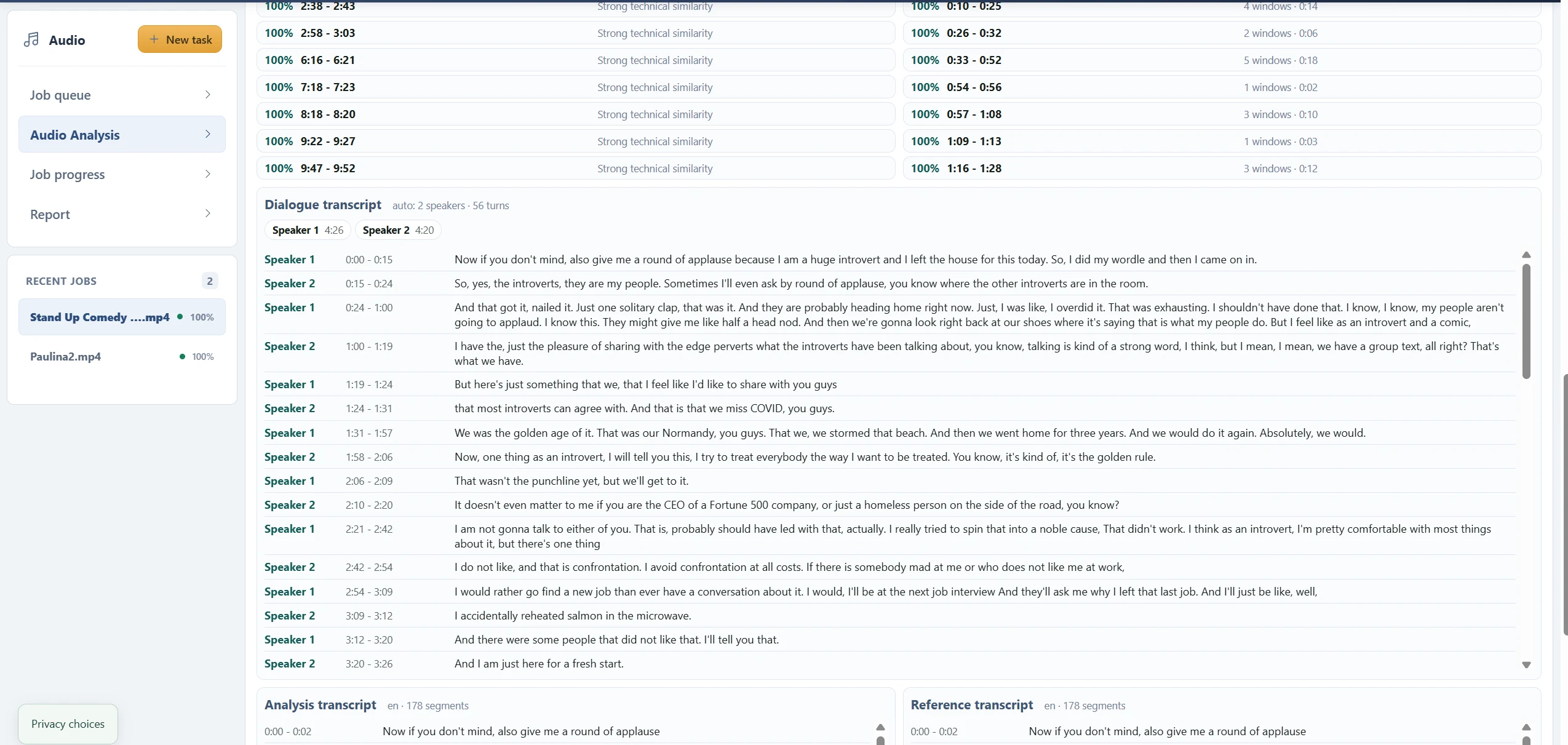
From two sources to a report you can inspect.
- 01
Choose the analysis source
Upload the audio recording, or select a video and confirm audio extraction.
- 02
Add the reference
Supply a voice sample; it is required by the current analysis workflow.
- 03
Set the speaker count
Choose Auto or a known count from 1 to 5, then review both sources.
- 04
Submit and follow progress
Finish uploading and let the background task build the report.
- 05
Read and listen
Compare timestamps, speaker turns, quality indicators and the original sound.
From a recording to readable speech.
Use the Analysis Audio Track for the recording you want transcribed. Add the Reference Audio Track to satisfy the current two-source workflow, select Auto or the known speaker count and review before Upload and start analysis. The reference is used for voice comparison; it is not a text prompt or a vocabulary file.
The analysis transcript lists recognized text in timed segments. The dialogue transcript associates those segments with numbered speaker labels. Both are generated from the sound, so names, punctuation, accents, quiet speech and overlapping voices can require correction in your own notes.
Find the passage. Verify the words.
Read the timestamp next to the passage and seek the Analysis Audio Track player to that position. Listen with the surrounding context before copying an important quotation. Speaker labels help navigation, but a label change can be a clustering error rather than a real change of person.
The interface currently provides an inspectable transcript in the report. It does not offer a transcript editor or dedicated TXT, SRT or VTT export buttons. Do not plan a subtitle delivery around formats that are not available in this workflow.
Check the language before a longer job.
The current supported language configuration is English, Ukrainian and Russian. Language detection is automatic in the standard interface. Inspect the detected language and confidence after processing and test a short representative excerpt before submitting a longer recording.
A recording with music, very little speech or frequent language switching can produce misleading text. No transcript is guaranteed to include every spoken word. Return to the source whenever a passage matters.
Questions about this workflow
Do I need a reference file just to transcribe?
Yes, in the current workflow. Select an analysis source and a reference source before starting. There is no separate one-file transcription mode yet. For a meaningful voice comparison, use a clean sample of the voice you want to compare.
Can I close the tab?
Keep the tab open until both uploads and submission finish. Processing then continues in the background; return to your Audio task list for progress and the report.
What are the current input limits?
Each upload is limited to 512 MiB. The analysis recording can be up to 30 minutes, and the reference must contain at least 3 seconds of detected speech. Processing, storage and quality checks also apply.
A different question. The same connected report.
Audio Analysis
Analyze speech in audio or video with transcripts, speaker segments, voice comparison, quality indicators and charts in one inspectable report.
Video to Text
Transcribe the spoken audio in an uploaded video. Confirm audio extraction, add the required reference and review timestamped speech in the report.
Speaker Diarization
Group speech into numbered speaker turns and timed segments. Inspect the dialogue transcript and check automatic assignments against the recording.
Voice Comparison
Compare an analysis recording with a reference voice sample. Review matched speech windows, speaker summaries and recording quality before interpreting similarity.
Listen closer. Read with context.
Find and Listen to Audio Speaker Segments
Use speaker labels, dialogue turns, matched windows and timestamps to locate and listen to passages in an Audio Analysis report.
How to Read an Audio Analysis Report
Understand source players, quality indicators, transcripts, speaker groups, voice similarity and signal charts in the current Audio Analysis report.
What Voice Similarity Scores Mean
Understand best score, top 5 median, matched speech, speaker summaries and technical similarity labels without treating them as identity probabilities.
Audio Transcription Language Support
Check the current English, Ukrainian and Russian configuration, automatic language detection and limitations for multilingual or unclear speech.
See what your media
can do for you.
Create your free accountNo card required. Start with a Free account.